One Day in Konya
From the Mevlana Museum to Alaaddin Hill, a day of Seljuk madrasas and museums, mostly on foot.
1 day · 4 stops · about 2.5 km · about 4 h 35 min including visits · on foot and by transport
Konya was the capital of the Seljuk Sultanate of Rum, the Turkish state that ruled much of Anatolia in the twelfth and thirteenth centuries, and it is the city of Rumi, the Sufi poet known in Turkey as Mevlana. The part worth seeing is compact. The Mevlana Museum sits at one end; at the other is Alaaddin Hill, a low mound in the middle of town ringed by Seljuk madrasas, the old theological colleges. The two ends are joined by a straight, busy avenue that is easy to walk, and taxis are plentiful if you tire. Do Mevlana in the morning, because it gets busier as the day goes on, and the madrasas in the afternoon.
Day 1
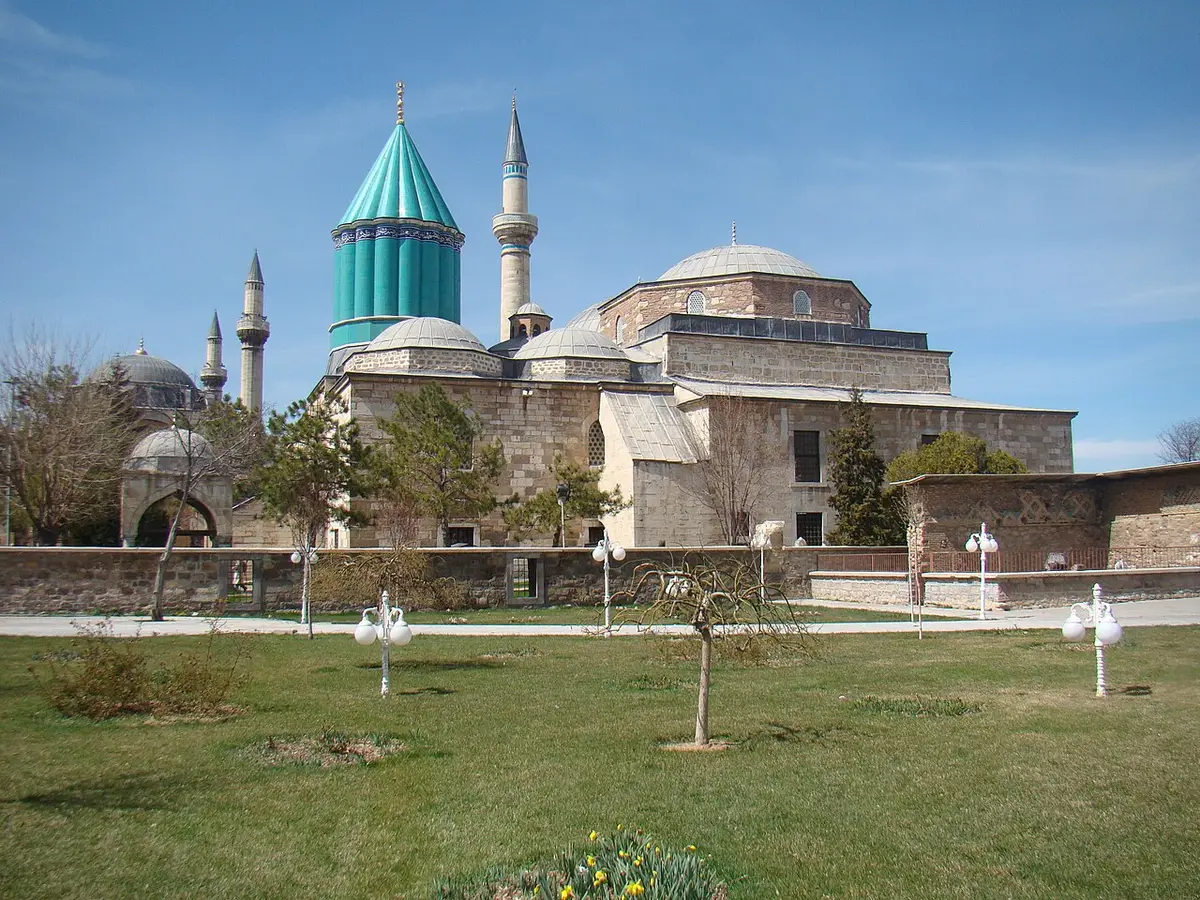
Start at the Mevlana Museum, the former lodge of the Mevlevi order, whose members are known abroad as the whirling dervishes. Under the green-tiled dome lies the tomb of Rumi alongside members of his family. The ceremonial hall and the dervishes' cells hold manuscripts, musical instruments and objects from daily life in the lodge. Many Turkish visitors come here as pilgrims, so keep quiet inside and cover shoulders and knees. Allow an hour and a half. If you step into the Sultan Selim Mosque next door, women need a headscarf.
Walk west along the avenue to Alaaddin Hill. The Alaaddin Mosque on top and the remains of a Seljuk pavilion are not separate entries in our data, but you pass them, and the park on the hill is a pleasant place for lunch.
On the north side of the hill, the Karatay Museum is the Karatay Madrasa, built in the mid-thirteenth century and now the Museum of Tile Works. The turquoise and dark blue tiles covering the inside of the dome are the main exhibit; the cases also hold figurative tiles from Seljuk palaces. Allow an hour.
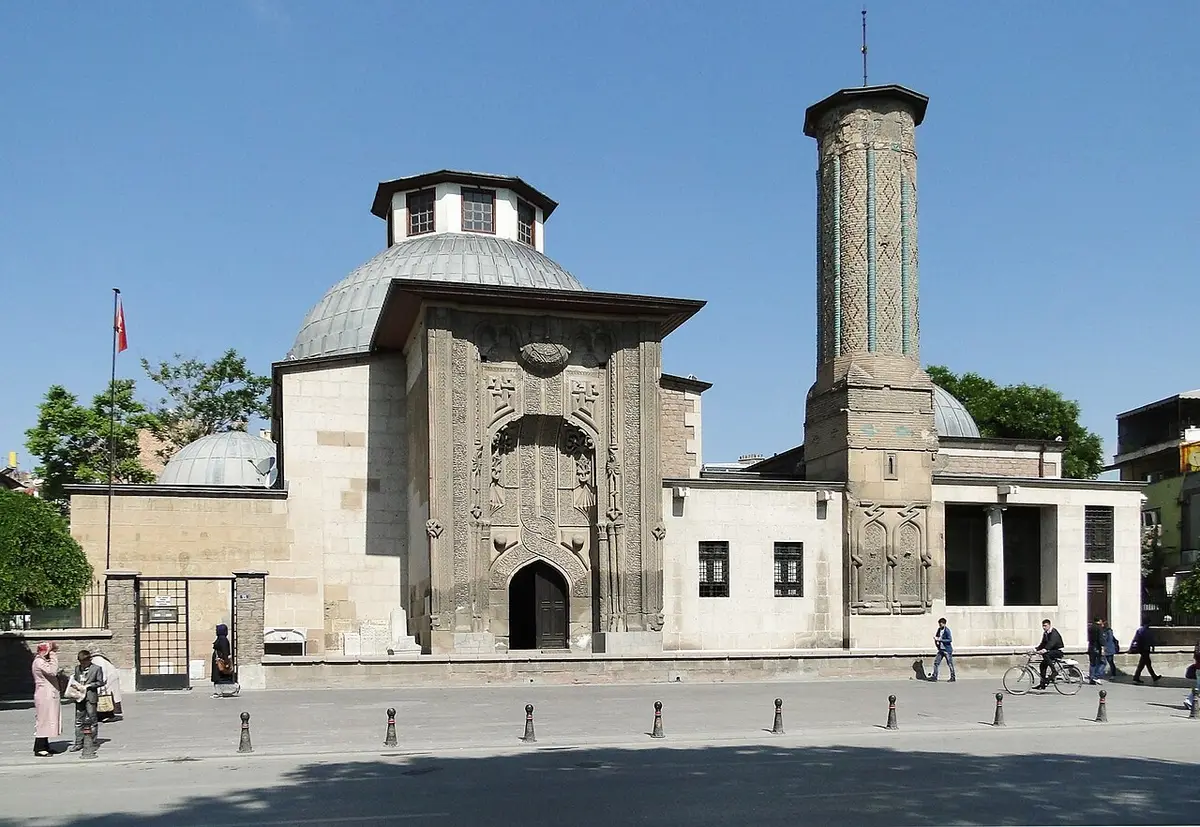
On the west slope, the Ince Minaret Madrasa takes its name from a slender minaret of which only the lower part still stands. Stop outside first to look at the bands of carved inscription on the stone portal. Inside is the Museum of Stone and Wood Carving, with building inscriptions, carved wooden doors and reliefs from Konya's city walls. An hour is enough.
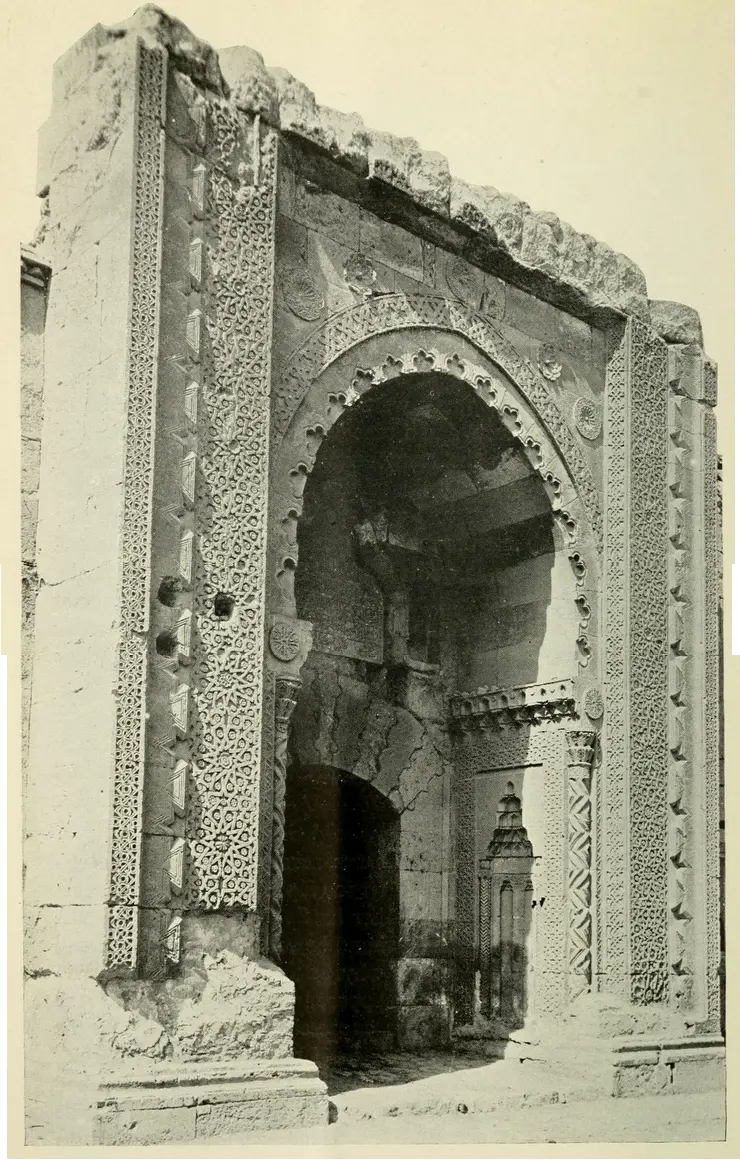
Finish south of the hill at the Sırçalı Madrasa. It is named after its glazed tile decoration and now displays gravestones; a short half-hour stop. If you still have energy, the Sahip Ata Museum is in the same part of town.
Practical notes
The distances are short but they add up over a day, so wear comfortable shoes. Konya is dry and hot in summer; spend the middle of the day indoors. Some museums close one day a week; check the hours on each museum page. The Müzekart, the Turkish state museum pass, may be valid at the state-run museums; confirm on the official list.
With a second day, the old village of Sille north-west of the city makes a good half-day trip. See the Konya page for the rest of the province. Konya lies on the road between Cappadocia and Ankara, so this day fits well with three days in Cappadocia or two days in Ankara.
Stops
- Photo: Wikimedia Commons
Cover shoulders and knees for the tomb chamber.
To the next stop: about 1.5 km · 20 min on foot
The Karatay Madrasa, home to the Seljuk tiles.
To the next stop: about 0.4 km · 6 min on foot
- Photo: Wikimedia Commons
Ince Minaret Medrese
Konya
Spend a few minutes on the carved stone portal before going in.
To the next stop: about 0.6 km · 8 min on foot
- Photo: Wikimedia Commons
Sırçalı Madrasah
Konya
A small building; half an hour is plenty.
Distances are straight-line estimates adjusted for roads and paths; check the hours on each museum page before you go.